









Acceptance and Commitment Therapy for Eating Disorders: A Process-Focused Treatment Guide for Anorexia and Bulimia – Sandoz Emily K., Wilson Kelly G., Dufresne Troy – Williams – 2022 – ISBN 978-5-907458-62-8
Acceptance and Commitment Therapy for Eating Disorders: A Process-Focused Treatment Guide for Anorexia and Bulimia
29.99 €
Out of stock

Acceptance and Commitment Therapy for Eating Disorders: A Process-Focused Treatment Guide for Anorexia and Bulimia
29.99 €
To add a product to the waitlist, please sign in:
Log in
A process-oriented guide to treating eating disorders with ACT.
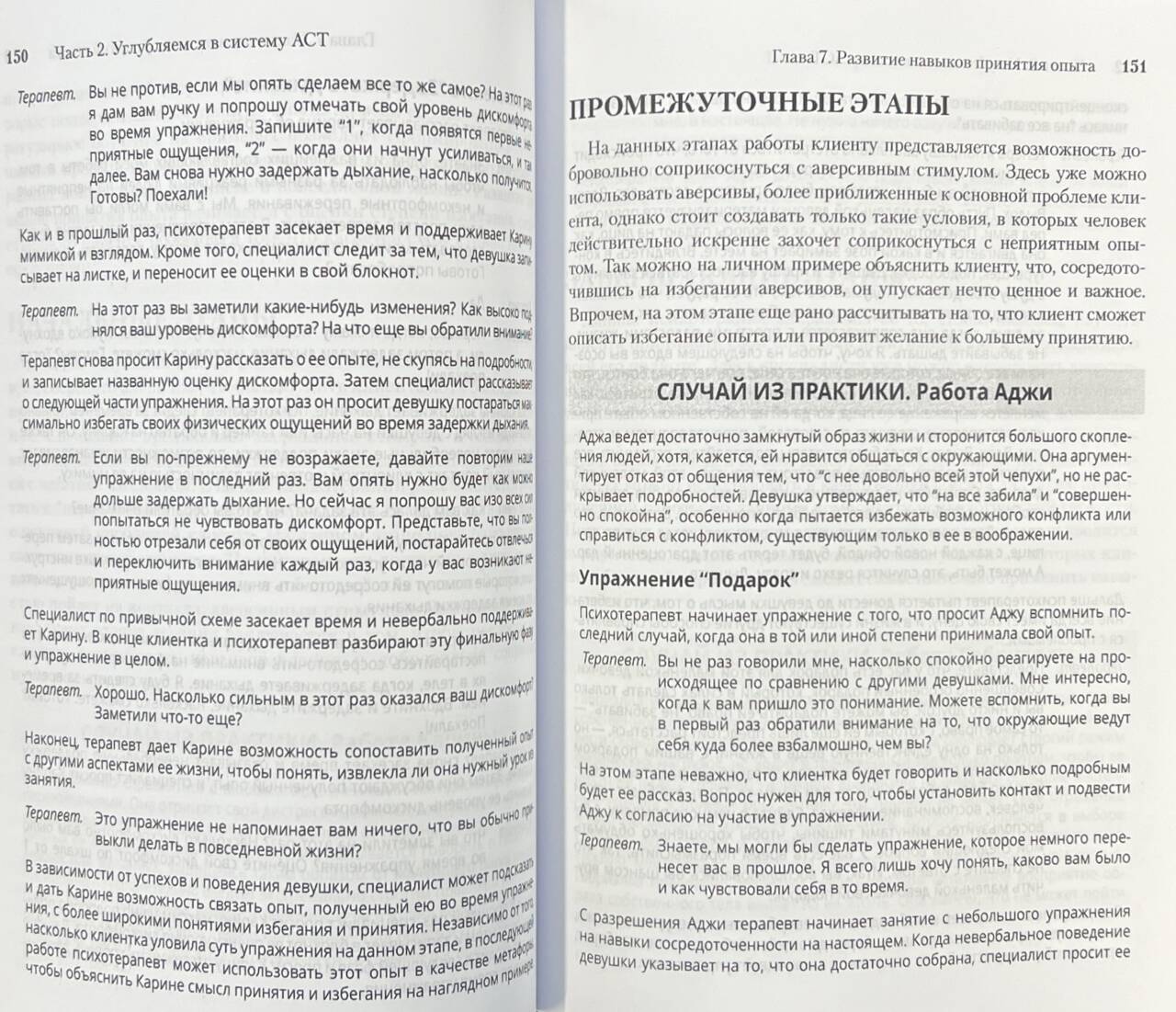
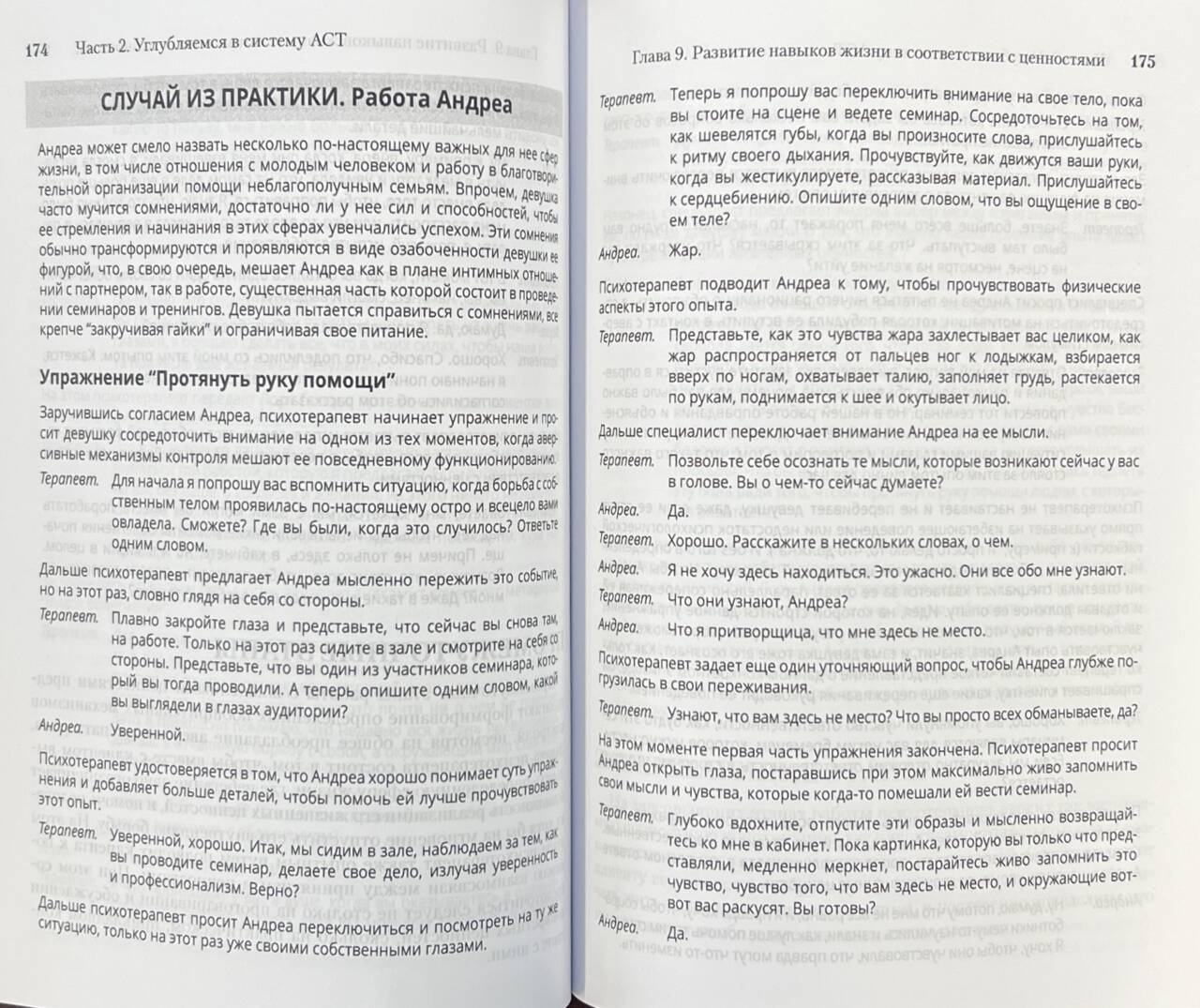
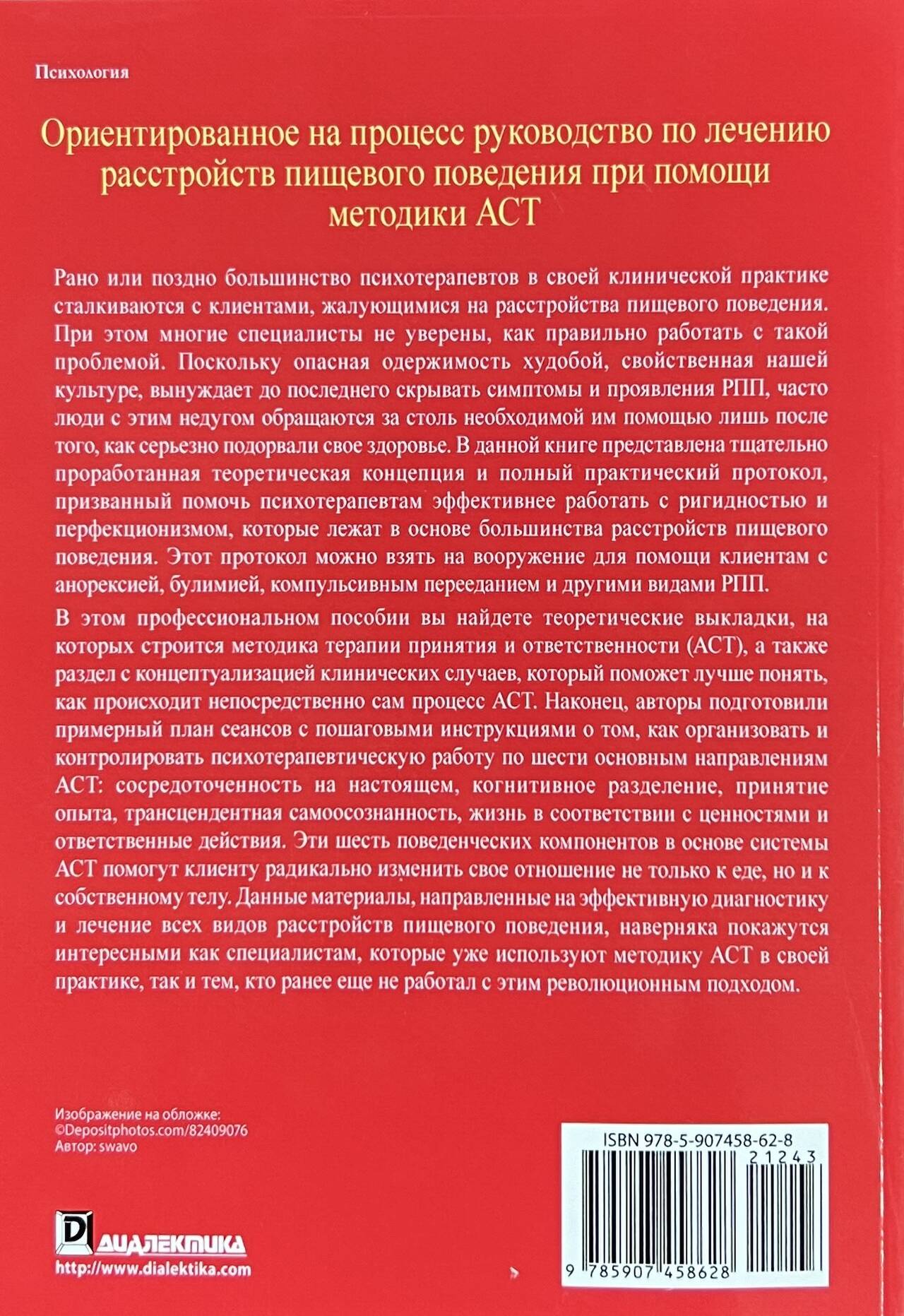
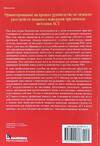
This manual, designed for professional therapists, focuses on the application of Acceptance and Responsibility Therapy (ACT) to eating disorders (ED). The book will be useful for those who are already practicing this methodology and for those who have not yet worked with ACT but wish to learn it. The book presents the theoretical conceptual foundations on which the ACT methodology is based, as well as applied recommendations for practitioners. Moreover, you will find a complete practical protocol and a sample session plan that will help you immediately apply the new methodology in working with this specific type of disorder. Sooner or later, most psychotherapists in their clinical practice encounter clients who complain of eating disorders. In doing so, many professionals are unsure of how to properly work with such a problem. Because our culture's dangerous obsession with thinness forces us to hide the symptoms and manifestations of an eating disorder until the last possible moment, people with this disorder often seek much-needed help only after they have seriously compromised their health. This book presents a thoroughly developed theoretical framework and a complete practical protocol to help psychotherapists work more effectively with the rigidity and perfectionism that underlie most eating disorders. This protocol can be adopted to help clients with anorexia, bulimia, compulsive overeating, and other types of RPD. In this professional manual, you will find the theoretical framework on which Acceptance and Responsibility Therapy (ACT) is based, as well as a case conceptualization section to help you better understand how the ACT process itself occurs. Finally, the authors have prepared a sample session plan with step-by-step instructions on how to organize and supervise psychotherapeutic work in the six core areas of ACT: present-centeredness, cognitive separation, acceptance of experience, transcendent self-awareness, living according to values, and responsible action. These six behavioral components at the core of the ACT framework will help the client radically change their relationship not only to food, but also to their own body. These materials, aimed at effective diagnosis and treatment of all types of eating disorders, are sure to be of interest both to professionals who already use ACT in their practice and to those who have not previously worked with this revolutionary approach.
This manual, designed for professional therapists, focuses on the application of Acceptance and Responsibility Therapy (ACT) to eating disorders (ED). The book will be useful for those who are already practicing this methodology and for those who have not yet worked with ACT but wish to learn it. The book presents the theoretical conceptual foundations on which the ACT methodology is based, as well as applied recommendations for practitioners. Moreover, you will find a complete practical protocol and a sample session plan that will help you immediately apply the new methodology in working with this specific type of disorder. Sooner or later, most psychotherapists in their clinical practice encounter clients who complain of eating disorders. In doing so, many professionals are unsure of how to properly work with such a problem. Because our culture's dangerous obsession with thinness forces us to hide the symptoms and manifestations of an eating disorder until the last possible moment, people with this disorder often seek much-needed help only after they have seriously compromised their health. This book presents a thoroughly developed theoretical framework and a complete practical protocol to help psychotherapists work more effectively with the rigidity and perfectionism that underlie most eating disorders. This protocol can be adopted to help clients with anorexia, bulimia, compulsive overeating, and other types of RPD. In this professional manual, you will find the theoretical framework on which Acceptance and Responsibility Therapy (ACT) is based, as well as a case conceptualization section to help you better understand how the ACT process itself occurs. Finally, the authors have prepared a sample session plan with step-by-step instructions on how to organize and supervise psychotherapeutic work in the six core areas of ACT: present-centeredness, cognitive separation, acceptance of experience, transcendent self-awareness, living according to values, and responsible action. These six behavioral components at the core of the ACT framework will help the client radically change their relationship not only to food, but also to their own body. These materials, aimed at effective diagnosis and treatment of all types of eating disorders, are sure to be of interest both to professionals who already use ACT in their practice and to those who have not previously worked with this revolutionary approach.
See also:
- All books by the publisher
- All books by the author