



Macbeth – William Shakespeare – Ladomir – 2026 – ISBN 978-5-86218-660-4
Macbeth
49.99 €
The only thing available 1

Macbeth
49.99 €
Macbeth (1606) is one of Shakespeare's greatest tragedies, ranking alongside Hamlet, Othello, and King Lear. It is loosely based on the story of the real-life Scottish king Macbeth (c. 1005–1057). Shakespeare transforms the noble ruler into a tyrant, driven by a thirst for power and driven by witches to a series of crimes.
The tragedy is a dark and mystical portrait of 11th-century Scotland, engulfed in war and civil strife. Here, valor coexists with betrayal, bloody deeds with inner torment, and fate seems to lead the heroes to destruction. The world of the play is full of ambiguity and nebulous meanings; even the final triumph of good remains ambiguous. The literary depth and powerful language of Macbeth have made it a source of countless quotations and an inspiration for new masterpieces—from Faulkner to Leskov and Blok.
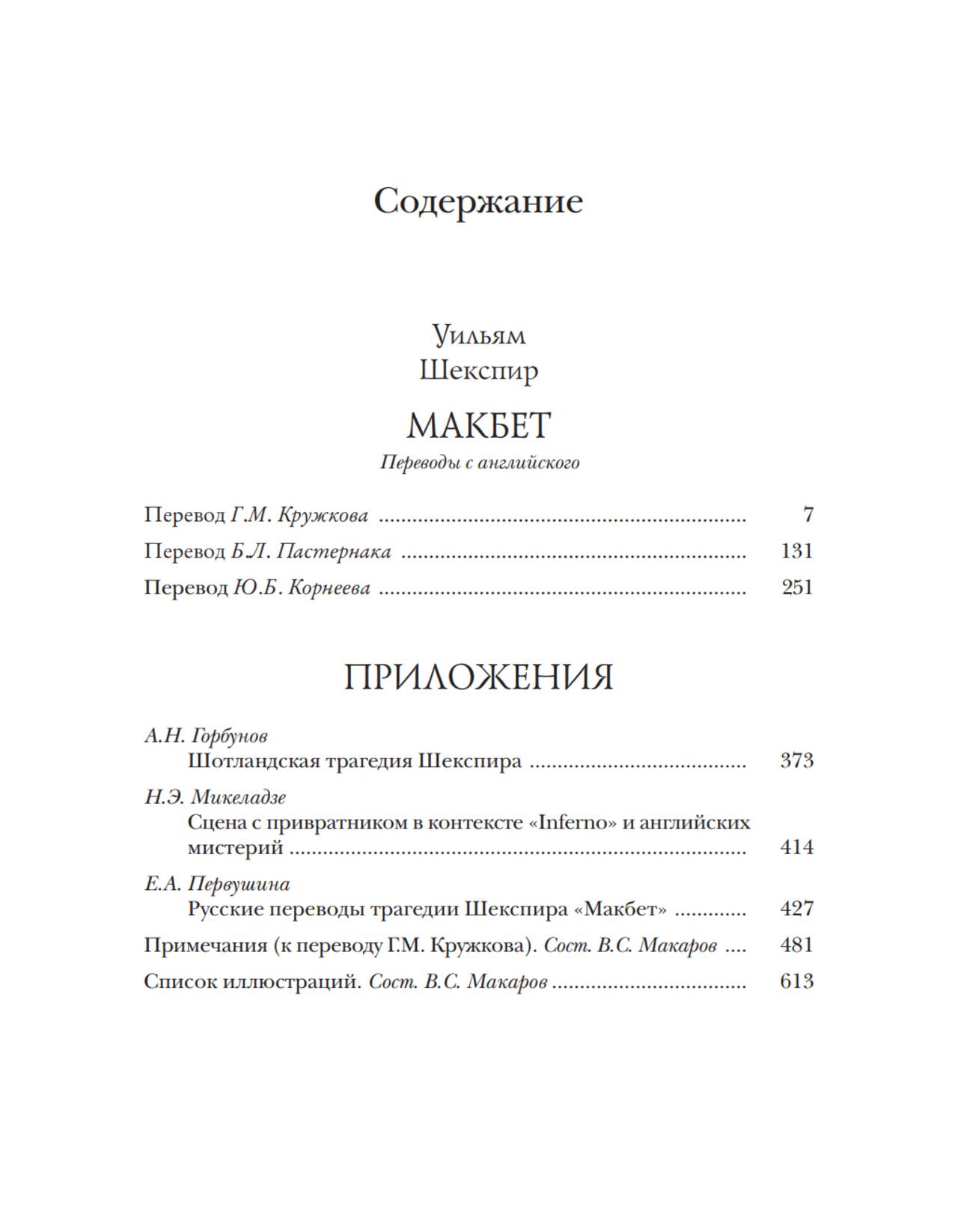
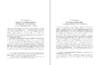
This volume includes three Russian versions of the tragedy: a new translation by G. M. Kruzhkov and the classic translations by B. L. Pasternak and Yu. B. Korneev—each with its own artistic interpretation.
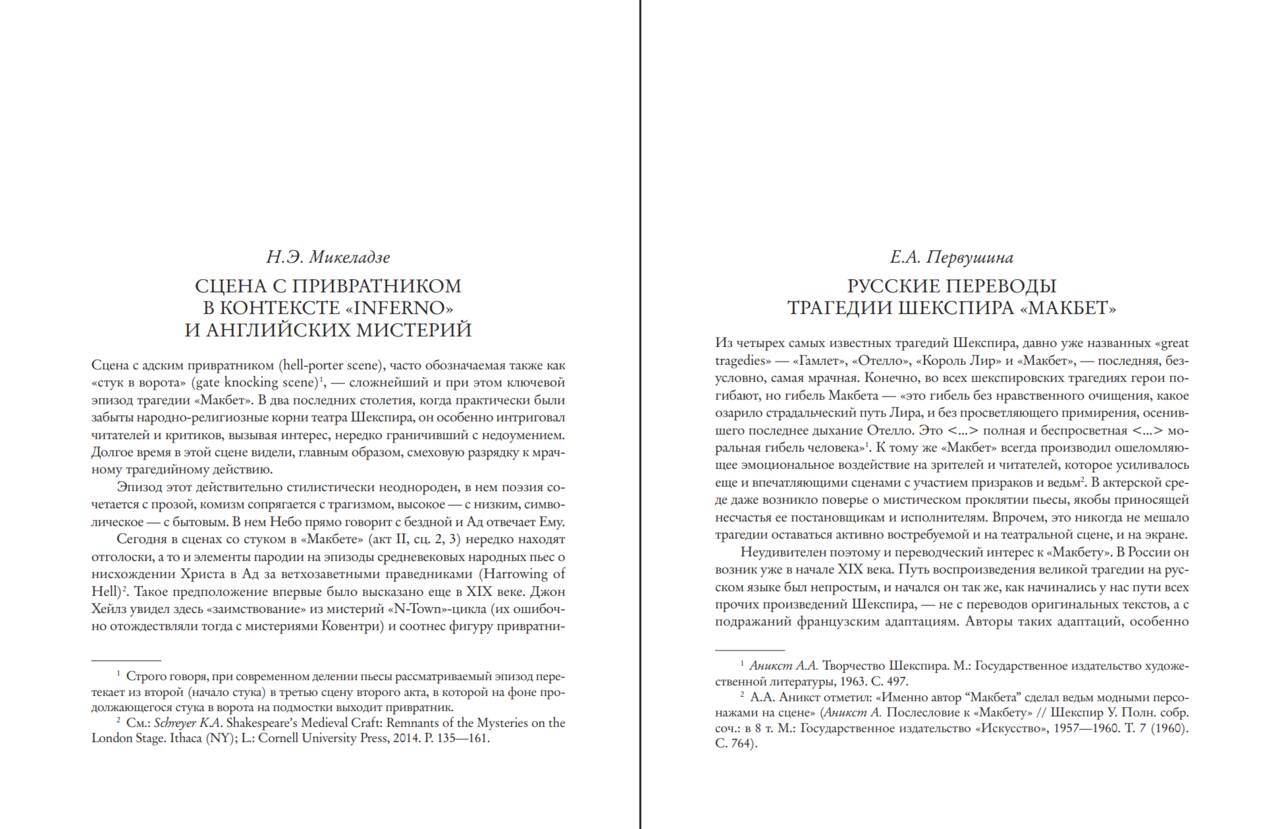
The publication's scholarly apparatus includes three articles. A. N. Gorbunov analyzes the historical context of the tragedy: the Gunpowder Plot, religious conflicts, the witch hunt, James I's interest in demonology, and the sources of the plot. N. E. Mikeladze examines the origins of the "knocking" scene, tracing its origins from the Gospels and Dante to English mystery plays. E. A. Pervushina examines in detail the Russian reception of Macbeth over three centuries. V. S. Makarov's extensive commentary reveals the play's multilayered nature.
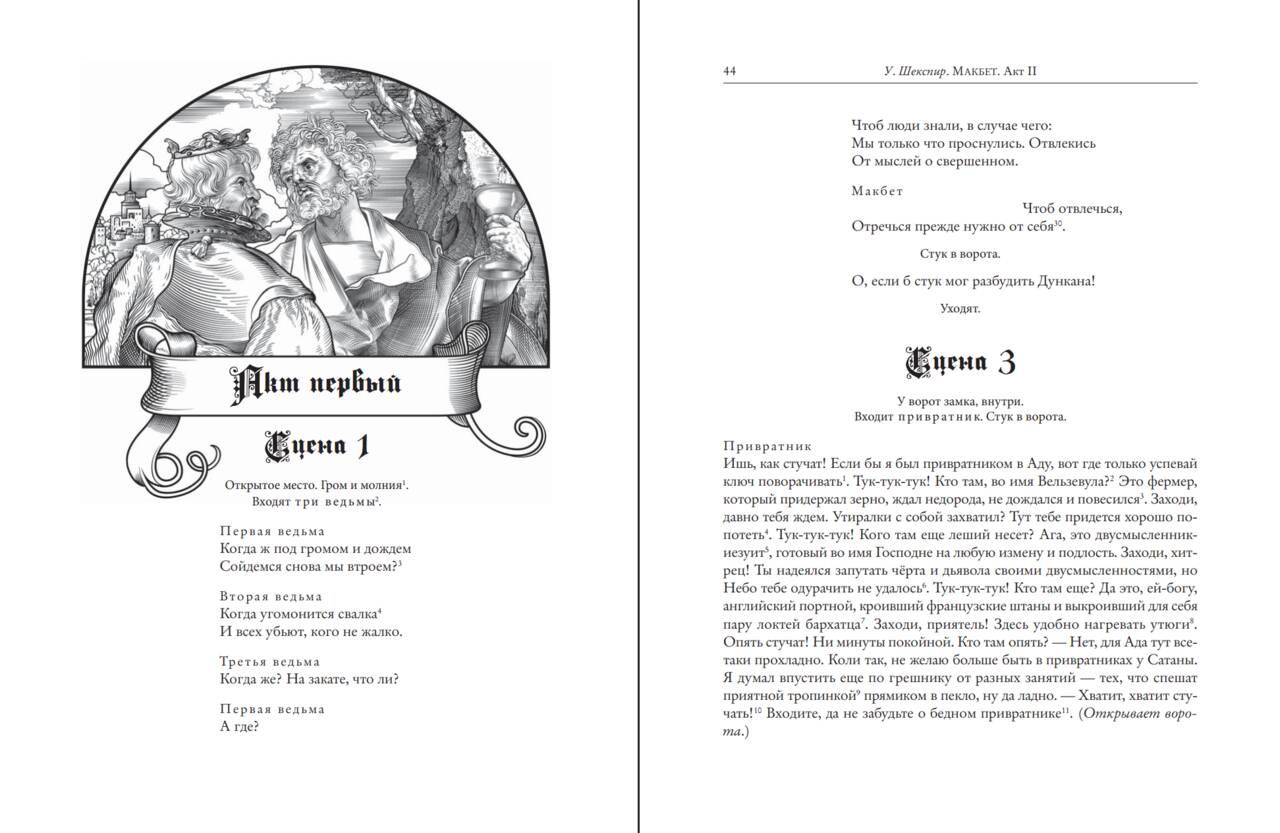
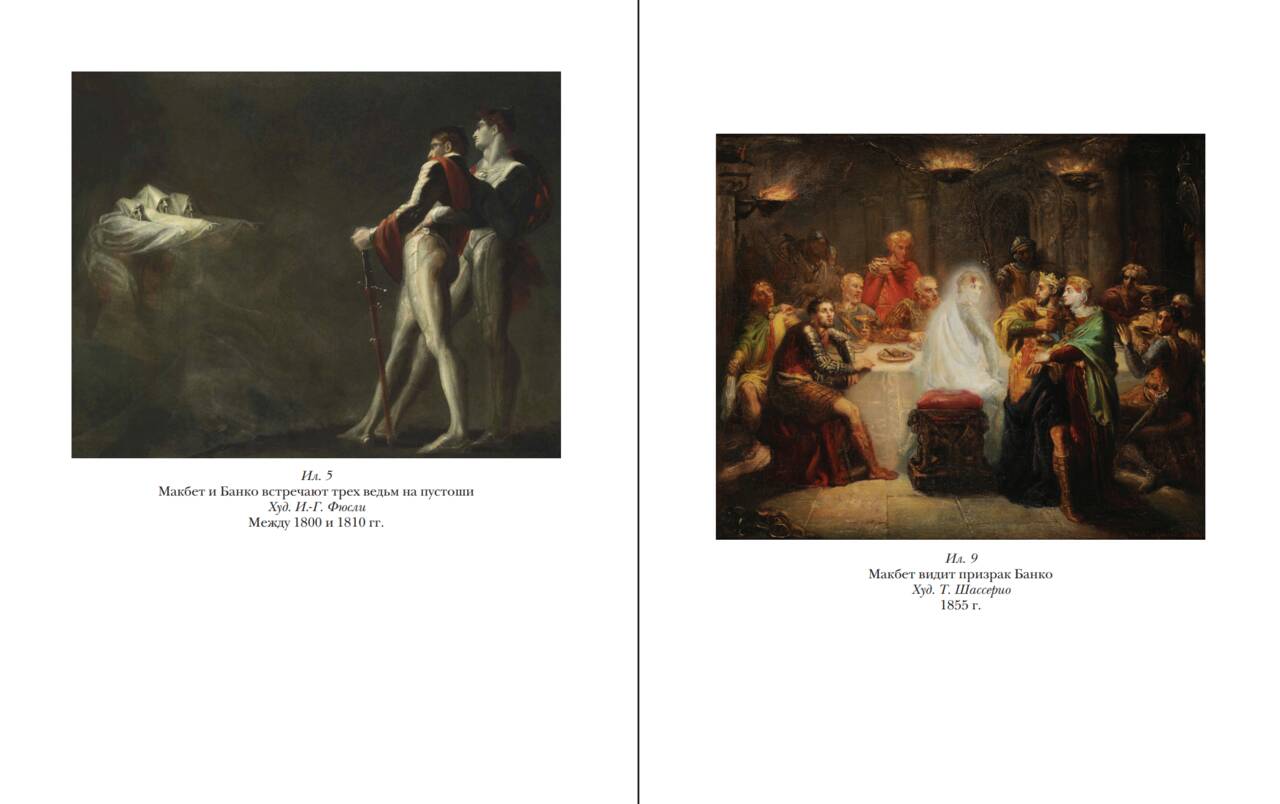
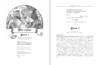
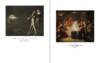
The album in this section contains engravings from Holinshed's Chronicles of England, Scotland, and Ireland (1577), Shakespeare's main source, as well as "imaginary" portraits of characters created by the artist Jacob de Wet II.
The tragedy is a dark and mystical portrait of 11th-century Scotland, engulfed in war and civil strife. Here, valor coexists with betrayal, bloody deeds with inner torment, and fate seems to lead the heroes to destruction. The world of the play is full of ambiguity and nebulous meanings; even the final triumph of good remains ambiguous. The literary depth and powerful language of Macbeth have made it a source of countless quotations and an inspiration for new masterpieces—from Faulkner to Leskov and Blok.
This volume includes three Russian versions of the tragedy: a new translation by G. M. Kruzhkov and the classic translations by B. L. Pasternak and Yu. B. Korneev—each with its own artistic interpretation.
The publication's scholarly apparatus includes three articles. A. N. Gorbunov analyzes the historical context of the tragedy: the Gunpowder Plot, religious conflicts, the witch hunt, James I's interest in demonology, and the sources of the plot. N. E. Mikeladze examines the origins of the "knocking" scene, tracing its origins from the Gospels and Dante to English mystery plays. E. A. Pervushina examines in detail the Russian reception of Macbeth over three centuries. V. S. Makarov's extensive commentary reveals the play's multilayered nature.
The album in this section contains engravings from Holinshed's Chronicles of England, Scotland, and Ireland (1577), Shakespeare's main source, as well as "imaginary" portraits of characters created by the artist Jacob de Wet II.
See also:
- All books by the publisher
- All books by the author
- All books in the series Literary monuments