


Reactions – Gray Theodore – IS – 2021 – ISBN 978-5-17-107960-4
Reactions
49.99 €
Out of stock

Reactions
49.99 €
To add a product to the waitlist, please sign in:
Log in
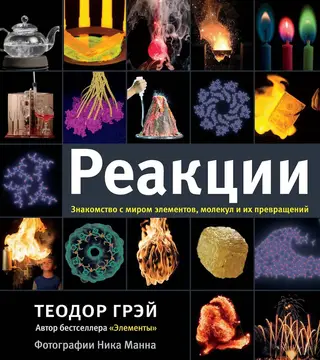
"Reactions" is a comprehensive, illustrated reference book that covers everything you need to know about amazing and incredible chemical reactions: from cosmic-scale events to microscopic occurrences rooted in the world of quantum mechanics.
Never before has the world of chemistry been so vibrant, visual, and captivating.
Why does fire come in different colors? How is caloric value measured? Why do chemists prefer to work with liquids, and why are reactions often carried out by boiling? Can you kill a venomous snake with a can of hairspray and a lighter, as James Bond did in one of the films? Is it true that the human body burns fat primarily at rest? American science writer Theodore Gray and photographer Nick Mann answer these and many other questions in their captivating guide to the world of chemical reactions—reactions that largely determine how the world around us looks and changes. Some reactions occur almost instantly. For example, one of the fastest reactions in the world is the exchange of a hydrogen ion between two water molecules, which, despite its apparent simplicity, leads to absolutely fantastic results. Other reactions, however, can take millions of years. For example, erosion, through which the most ancient formations on Earth—mountains—gradually become hills and then turn into plains. This, too, is a chemical process.
Never before has the world of chemistry been so vibrant, visual, and captivating.
Why does fire come in different colors? How is caloric value measured? Why do chemists prefer to work with liquids, and why are reactions often carried out by boiling? Can you kill a venomous snake with a can of hairspray and a lighter, as James Bond did in one of the films? Is it true that the human body burns fat primarily at rest? American science writer Theodore Gray and photographer Nick Mann answer these and many other questions in their captivating guide to the world of chemical reactions—reactions that largely determine how the world around us looks and changes. Some reactions occur almost instantly. For example, one of the fastest reactions in the world is the exchange of a hydrogen ion between two water molecules, which, despite its apparent simplicity, leads to absolutely fantastic results. Other reactions, however, can take millions of years. For example, erosion, through which the most ancient formations on Earth—mountains—gradually become hills and then turn into plains. This, too, is a chemical process.
See also:
- All books by the publisher
- All books by the author