


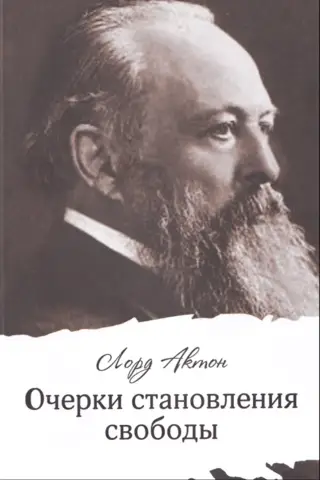
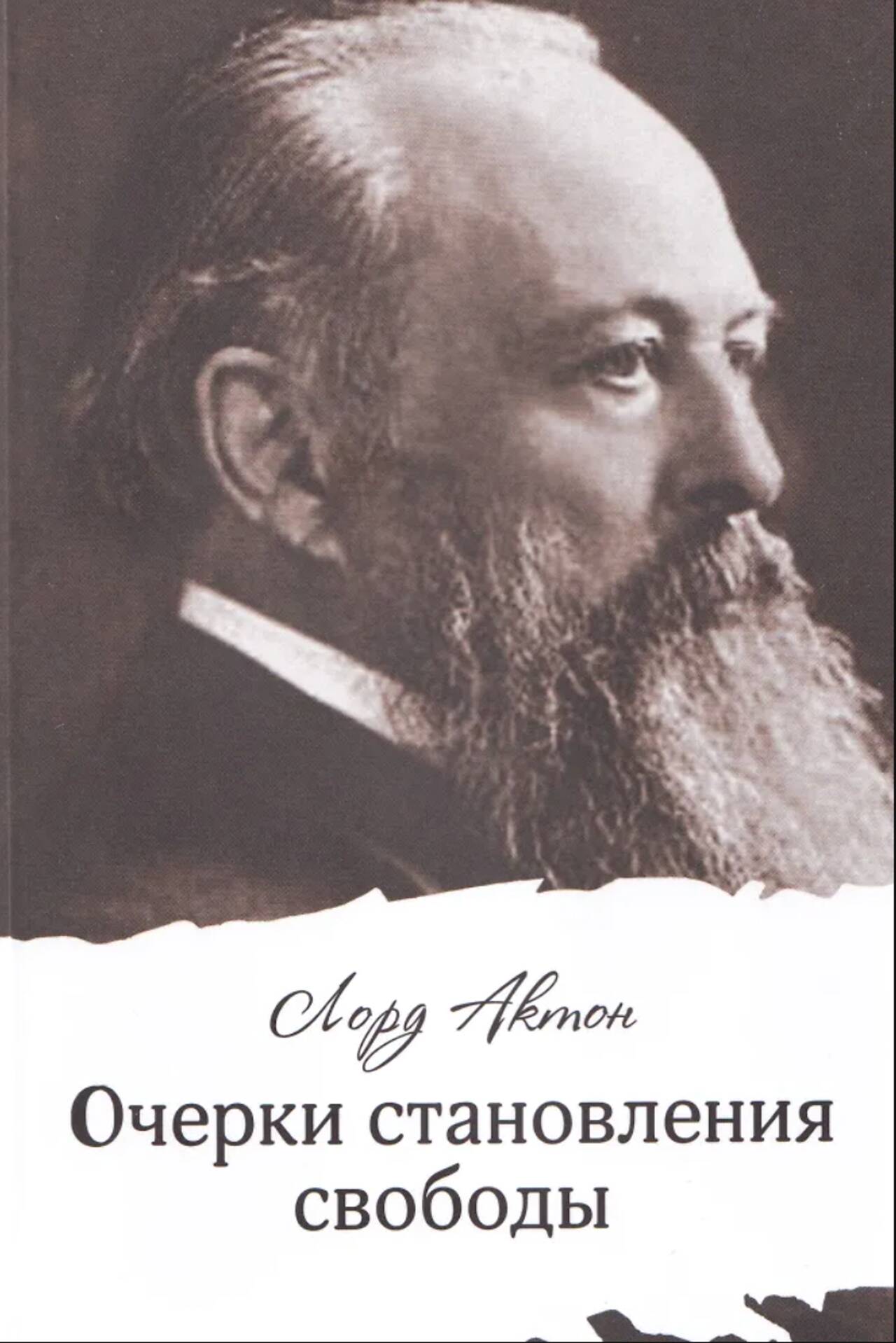
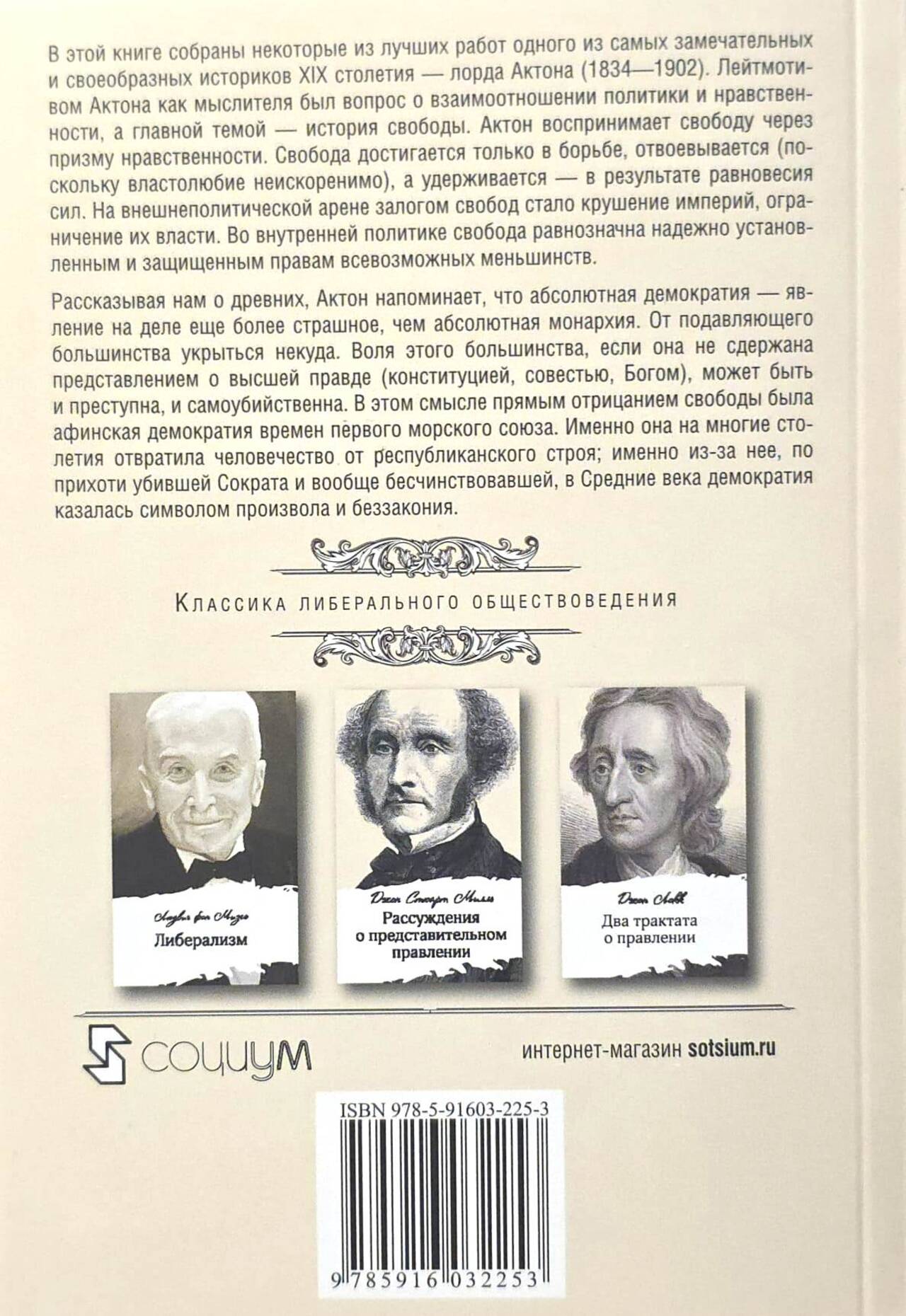
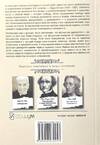
Essays on the Formation of Freedom – Lord Acton – Society – 2025 – ISBN 978-5-91603-225-3
Essays on the Formation of Freedom
6.99 €
The only thing available 1

Essays on the Formation of Freedom
6.99 €
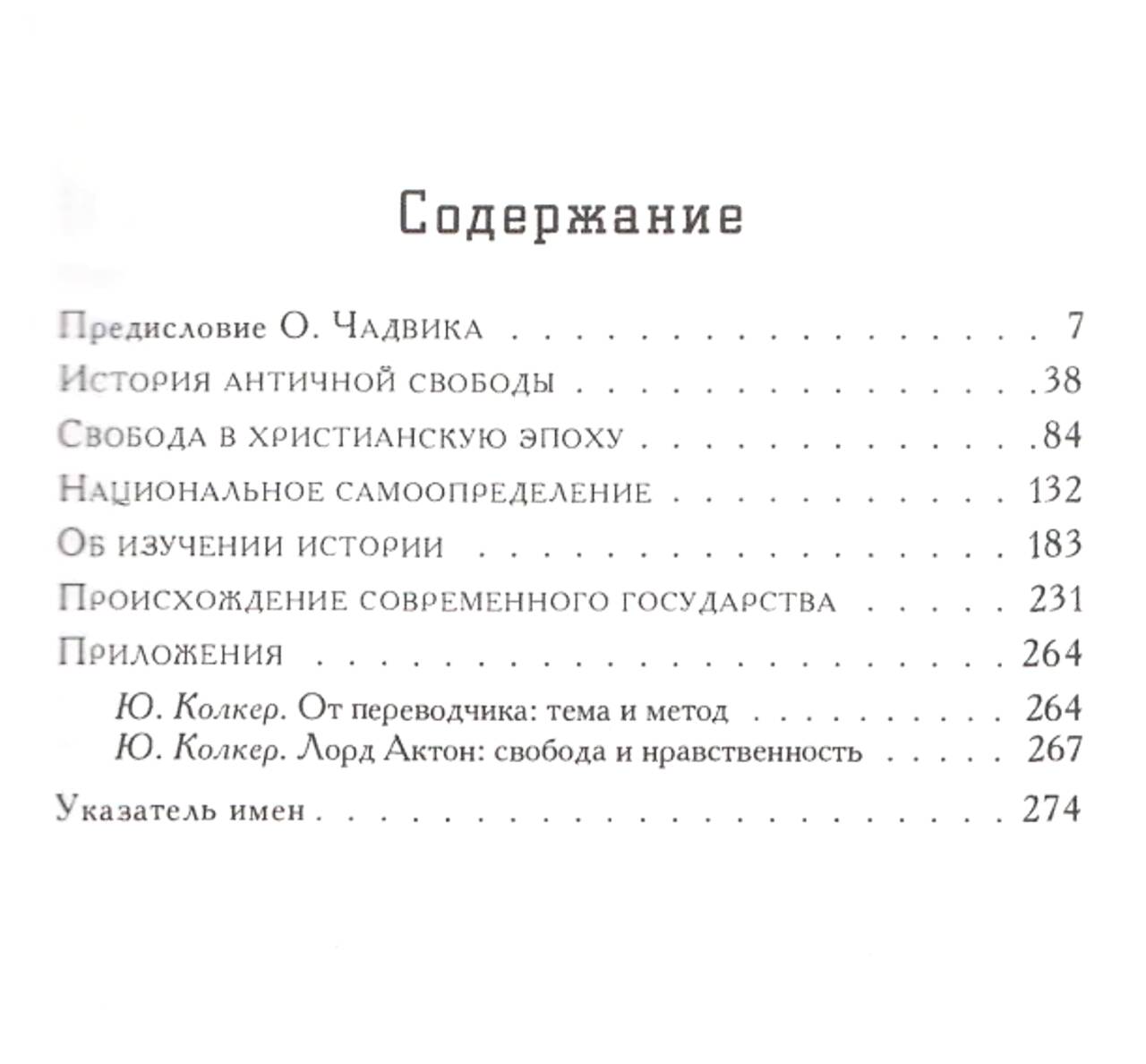
This book collects some of the finest works by one of the most remarkable and original historians of the 19th century, Lord Acton (1834–1902). Acton's leitmotif as a thinker was the relationship between politics and morality, and his primary theme was the history of freedom. Acton perceives freedom through the prism of morality. Freedom is achieved only through struggle, fought for (since the lust for power is ineradicable), and maintained through a balance of power. In foreign policy, the collapse of empires and the limitation of their power became the guarantee of freedom. In domestic politics, freedom is equivalent to the securely established and protected rights of all kinds of minorities.
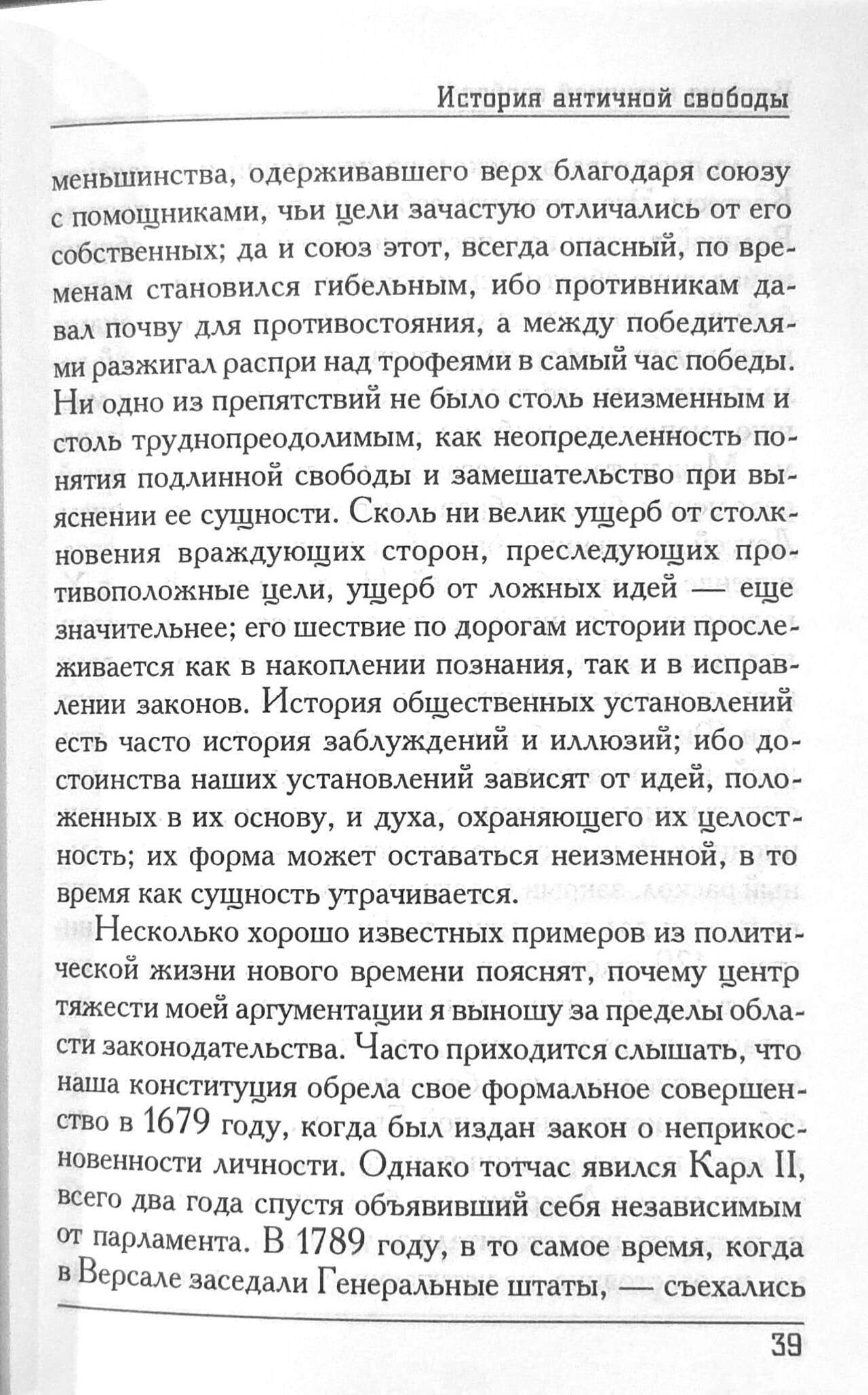
Telling us about the ancients, Acton reminds us that absolute democracy is in fact an even more terrifying phenomenon than absolute monarchy. There is nowhere to hide from the overwhelming majority. The will of this majority, if not constrained by a notion of higher truth (the constitution, conscience, God), can be both criminal and suicidal. In this sense, Athenian democracy during the time of the First Maritime League was a direct negation of freedom. It was this democracy that turned humanity away from republicanism for many centuries; it was precisely because of this democracy, which, on a whim, murdered Socrates and generally carried out its outrages, that democracy in the Middle Ages seemed a symbol of tyranny and lawlessness.
Telling us about the ancients, Acton reminds us that absolute democracy is in fact an even more terrifying phenomenon than absolute monarchy. There is nowhere to hide from the overwhelming majority. The will of this majority, if not constrained by a notion of higher truth (the constitution, conscience, God), can be both criminal and suicidal. In this sense, Athenian democracy during the time of the First Maritime League was a direct negation of freedom. It was this democracy that turned humanity away from republicanism for many centuries; it was precisely because of this democracy, which, on a whim, murdered Socrates and generally carried out its outrages, that democracy in the Middle Ages seemed a symbol of tyranny and lawlessness.
See also:
- All books by the publisher
- All books by the author