


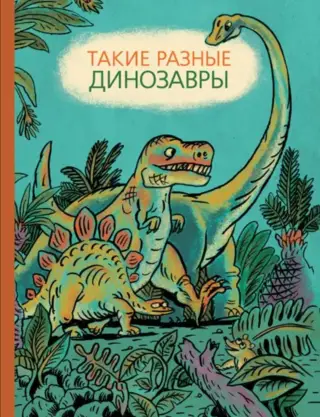
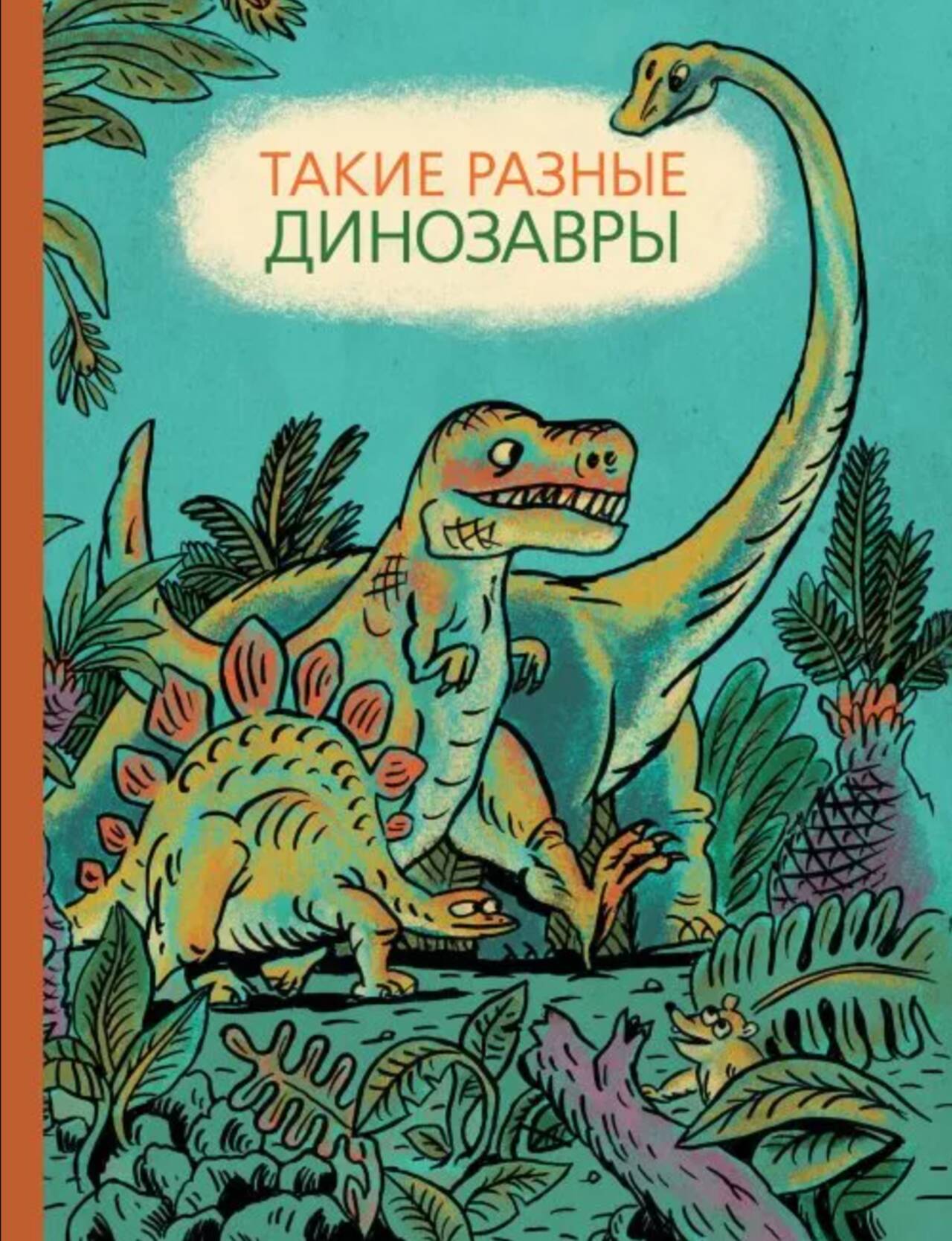
Such different dinosaurs – Melik-Pashayeva Maria, Rudenko Tatyana, Zatolokina Victoria – Melik-Pashayev – 2020 – ISBN 978-5-00041-617-4
Such different dinosaurs
19.99 €
Out of stock

Such different dinosaurs
19.99 €
To add a product to the waitlist, please sign in:
Log in
No creature from the distant past has captured the imagination of modern children quite like dinosaurs. Children delight their loving mothers by easily remembering and pronouncing difficult-to-pronounce and resonant names: Tyrannosaurus, Iguanodon, Pachycephalosaurus, and so on. Animators have long since transformed these "terrible lizards" into cute little creatures, and publishers regularly return to this theme.
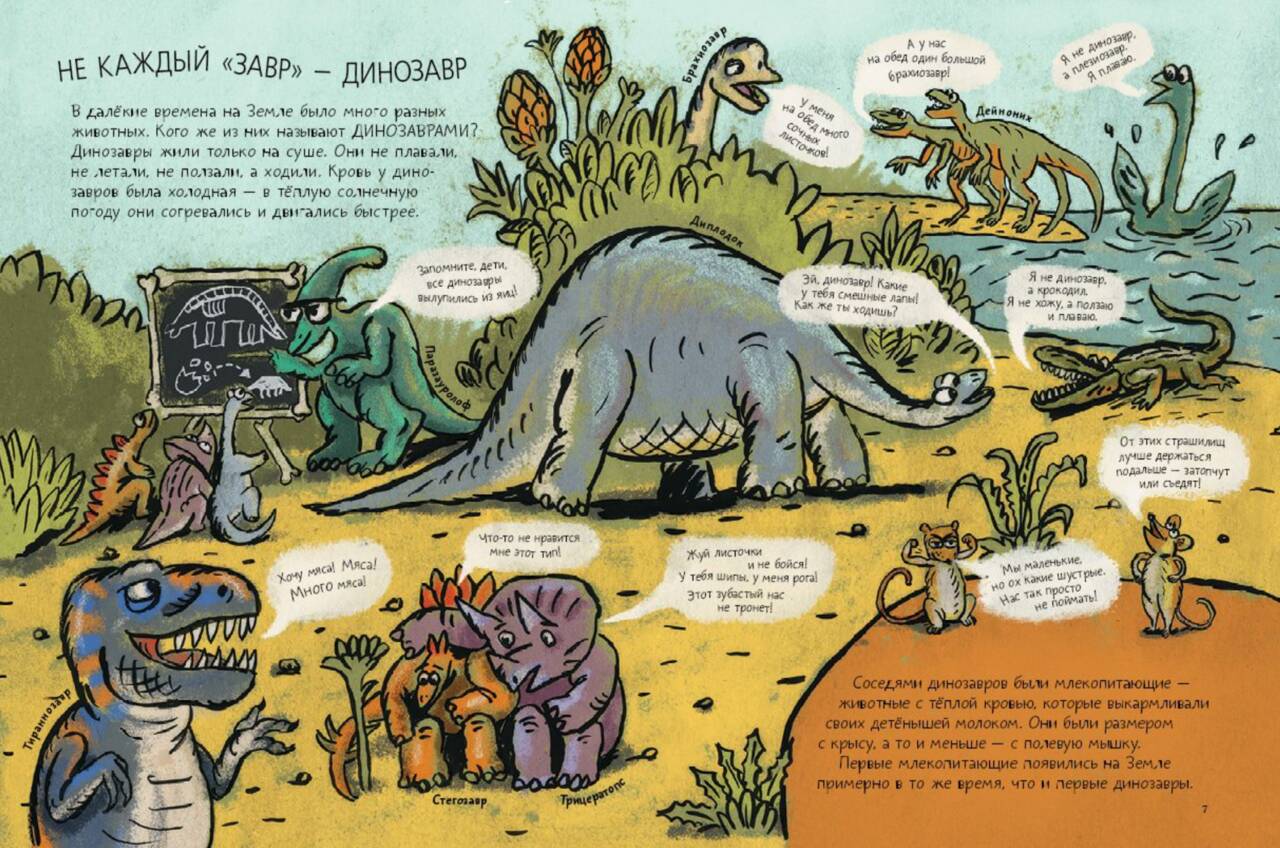
In this context, the book "Such Different Dinosaurs" occupies a special place. Conceived as a child's first introduction to the world of dinosaurs, it is therefore unburdened by complex terminology and is almost entirely structured in a playful manner. The dialogues and descriptions are extremely simple and engaging, yet all the information is scientifically accurate.
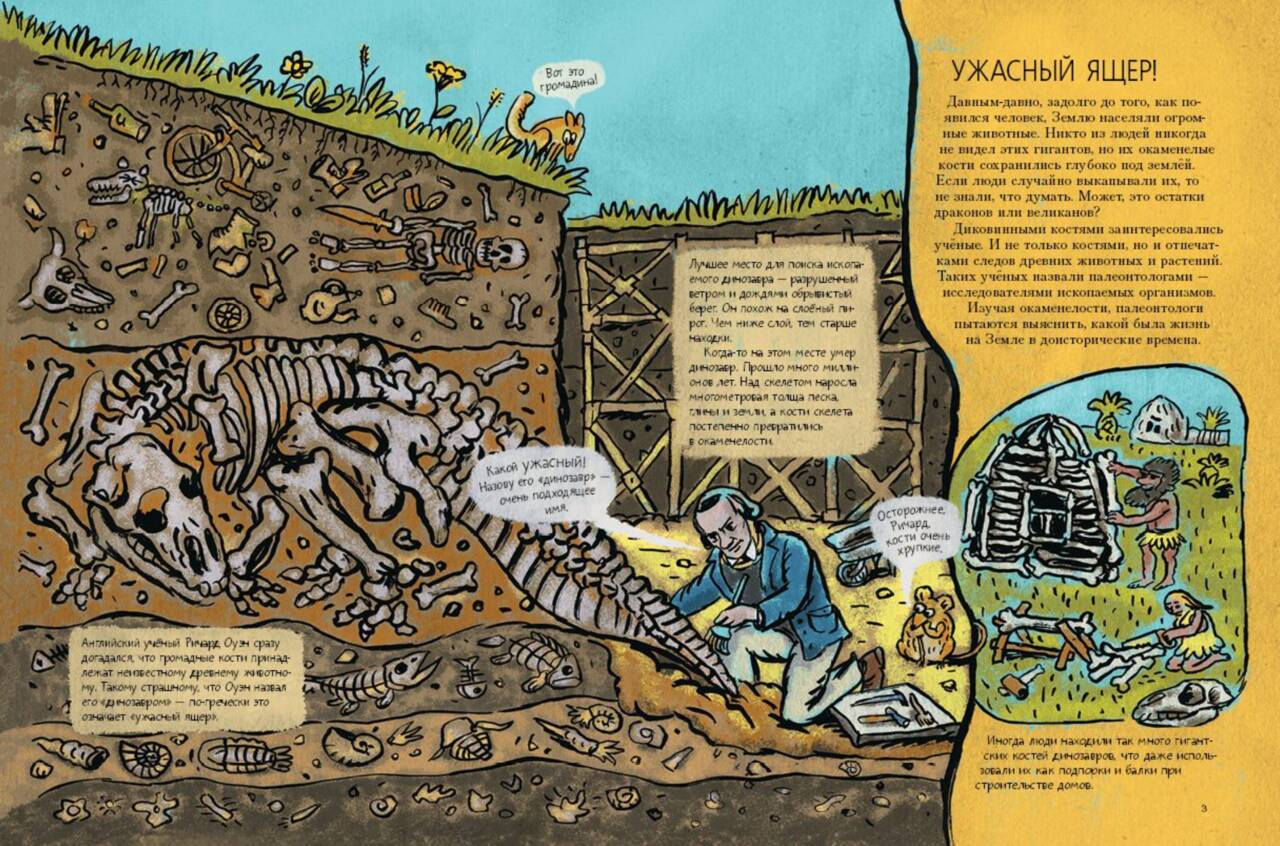
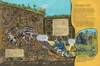
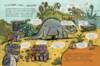
The first part of the book, illustrated by the young Moscow animator Philipp Yarin, is an attempt to imagine what a day in the life of dinosaurs might look like, how they might interact, and why. It's like the storyboard of a gripping film, in which comically drawn lizards hunt, fight, and constantly exchange dialogue.
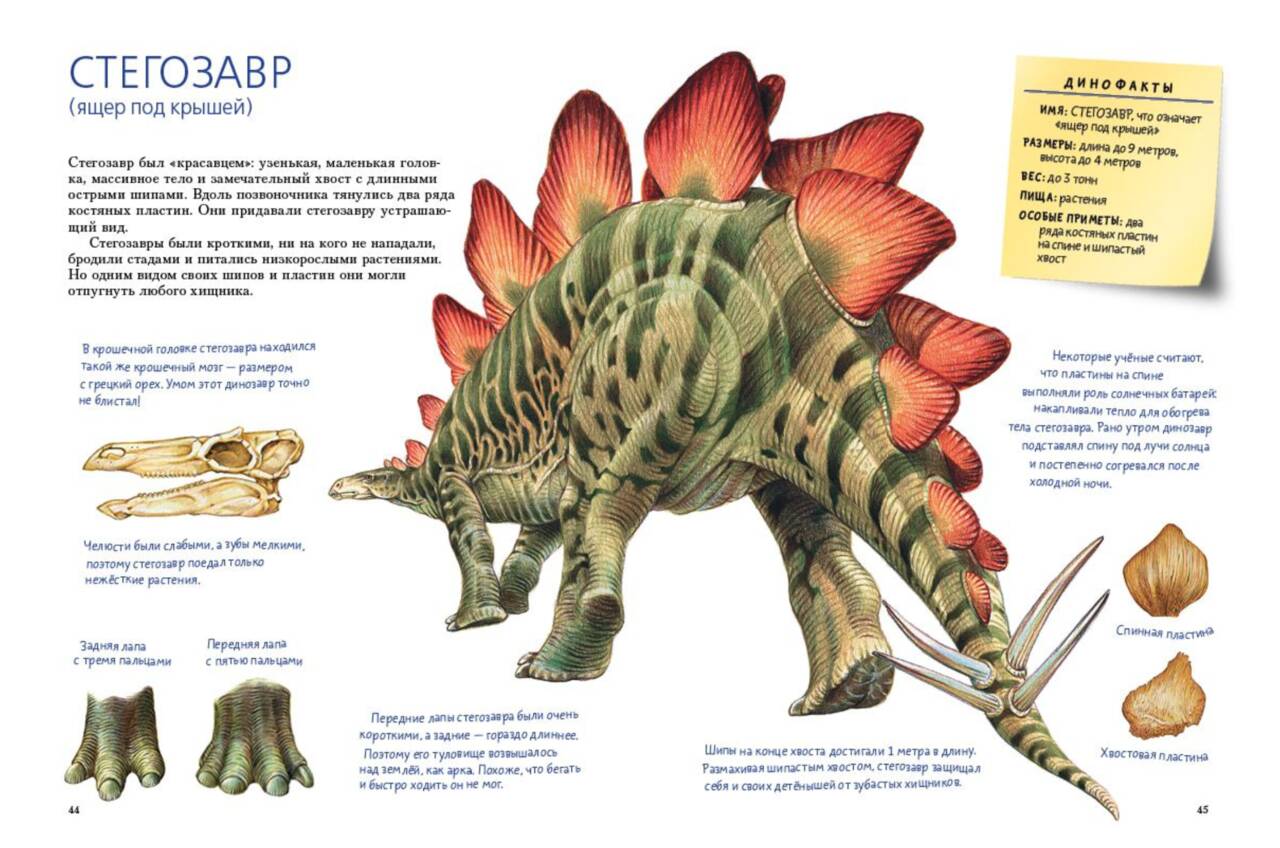
The second, encyclopedic part, illustrated by the master of Moscow animal painting, Alexander Sichkar, describes and draws in detail the most popular dinosaur species, as well as their "neighbors" and contemporaries—flying and swimming lizards and mammals. They are depicted so realistically that they seem drawn "from life."
At the very end of the book, there are questions and tasks that readers can complete to review the material and learn the names of ancient reptiles and some paleontological concepts.
The book helps young children gain an understanding of the environment in which dinosaurs lived, their lifestyle, and the diversity of their species. It also explores the difficult work of paleontologists, the process of searching for, studying, and recreating ancient reptiles.
In this context, the book "Such Different Dinosaurs" occupies a special place. Conceived as a child's first introduction to the world of dinosaurs, it is therefore unburdened by complex terminology and is almost entirely structured in a playful manner. The dialogues and descriptions are extremely simple and engaging, yet all the information is scientifically accurate.
The first part of the book, illustrated by the young Moscow animator Philipp Yarin, is an attempt to imagine what a day in the life of dinosaurs might look like, how they might interact, and why. It's like the storyboard of a gripping film, in which comically drawn lizards hunt, fight, and constantly exchange dialogue.
The second, encyclopedic part, illustrated by the master of Moscow animal painting, Alexander Sichkar, describes and draws in detail the most popular dinosaur species, as well as their "neighbors" and contemporaries—flying and swimming lizards and mammals. They are depicted so realistically that they seem drawn "from life."
At the very end of the book, there are questions and tasks that readers can complete to review the material and learn the names of ancient reptiles and some paleontological concepts.
The book helps young children gain an understanding of the environment in which dinosaurs lived, their lifestyle, and the diversity of their species. It also explores the difficult work of paleontologists, the process of searching for, studying, and recreating ancient reptiles.
See also:
- All books by the publisher
- All books by the author