





Psychology of politics – Eysenck Hans – Thought – 2024 – ISBN 978-5-244-01238-5
Psychology of politics
9.99 €
Out of stock

Psychology of politics
9.99 €
To add a product to the waitlist, please sign in:
Log in
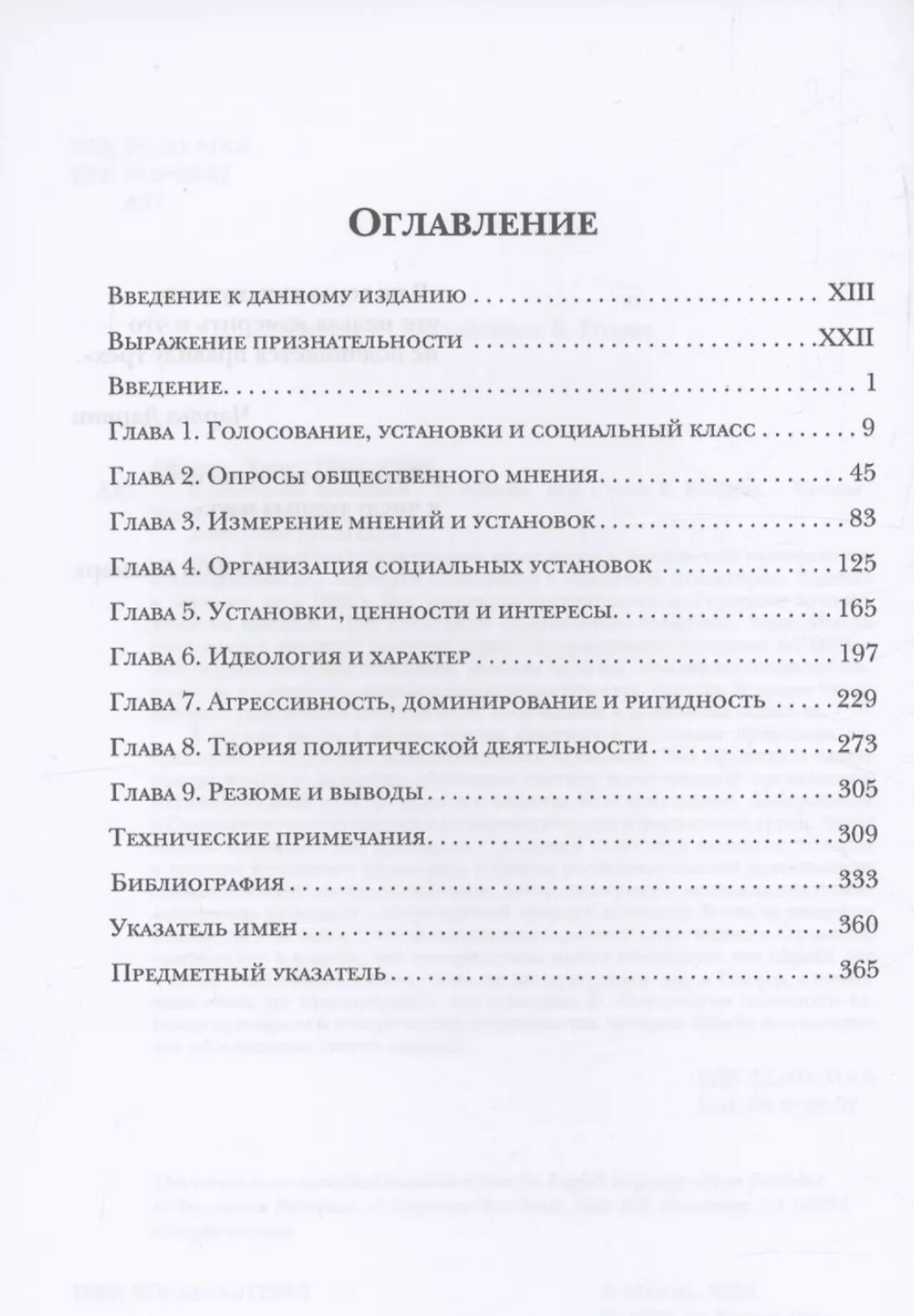
Hans Eysenck was a professor of psychology at the University of London and head of its Department of Psychology at the Institute of Psychiatry. Born in Berlin, he was forced to emigrate from Germany in 1938 due to his opposition to Nazism. In writing The Psychology of Politics, Hans Eysenck pursued two goals: to write a book on the current state of research on psychological attitudes that would be understandable to non-specialists and to synthesize into a single, coherent theoretical framework the vast body of scientific research on this topic, obtained in various fields.
The book begins by outlining the basic principles of organization and structure of psychological attitudes. These principles provided a surprisingly comprehensive and detailed explanation of the political organization of Great Britain at the time, including the presence of the Conservative, Liberal, and Socialist Parties, as well as communist and fascist groups. Eysenck then relates these principles to the system of personality structure, which had been the focus of research at the London Institute of Psychiatry for many years. The author integrates research on psychological attitudes with modern learning theory. In the new introduction to the book, Eysenck writes that his research and personal experience in Germany led him to the conclusion that authoritarianism can arise from both the right and the left. He considered Stalin as authoritarian as Hitler, and communism as totalitarian as Nazism. "The Psychology of Politics" collects the arguments and historical evidence Eysenck used to support his approach.
The book begins by outlining the basic principles of organization and structure of psychological attitudes. These principles provided a surprisingly comprehensive and detailed explanation of the political organization of Great Britain at the time, including the presence of the Conservative, Liberal, and Socialist Parties, as well as communist and fascist groups. Eysenck then relates these principles to the system of personality structure, which had been the focus of research at the London Institute of Psychiatry for many years. The author integrates research on psychological attitudes with modern learning theory. In the new introduction to the book, Eysenck writes that his research and personal experience in Germany led him to the conclusion that authoritarianism can arise from both the right and the left. He considered Stalin as authoritarian as Hitler, and communism as totalitarian as Nazism. "The Psychology of Politics" collects the arguments and historical evidence Eysenck used to support his approach.
See also:
- All books by the publisher
- All books by the author