




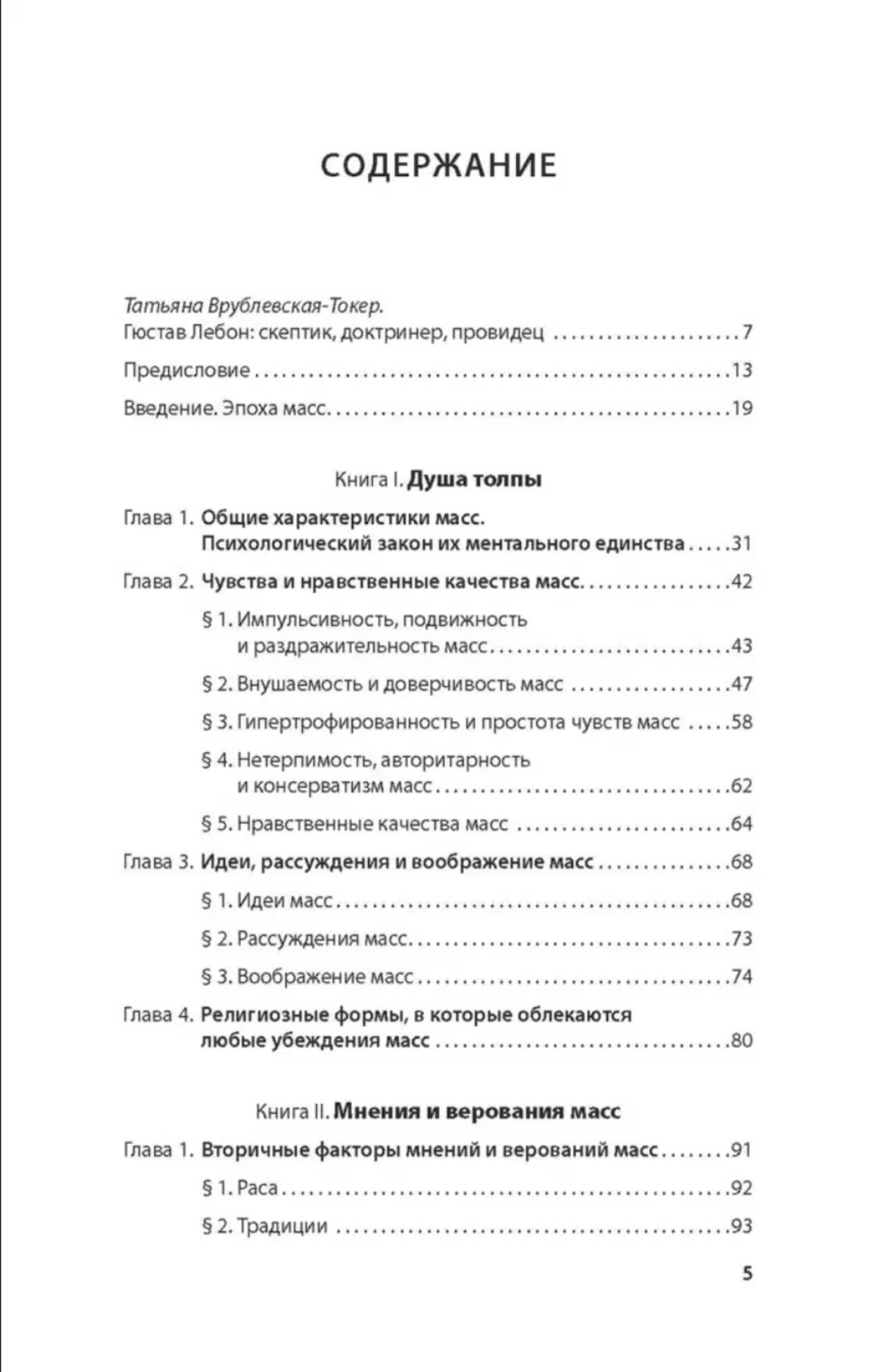
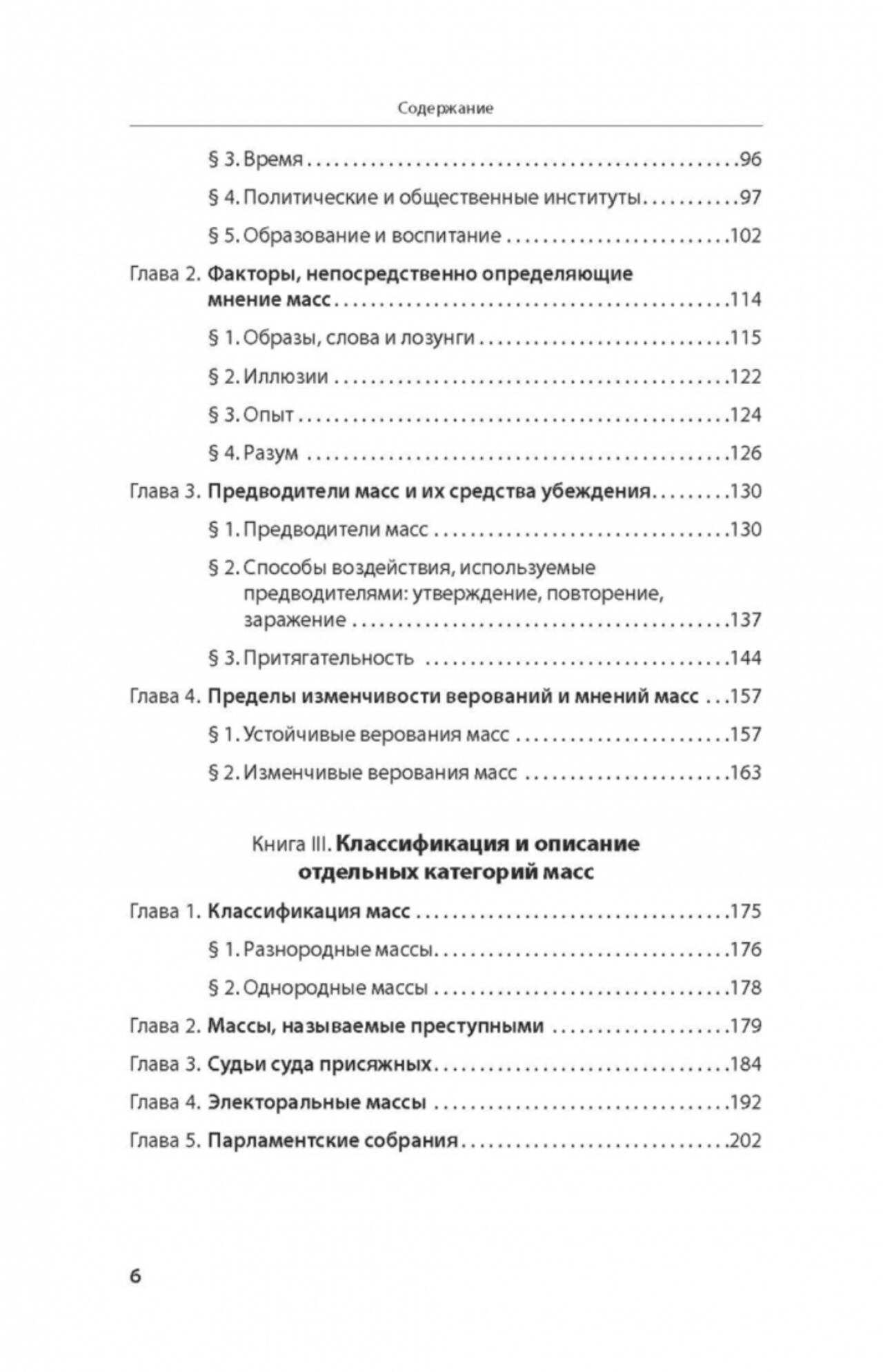

Mass psychology – Lebon Gustave – Potpourri – 2025 – ISBN 978-985-15-5999-8
Mass psychology
14.99 €
Out of stock

Mass psychology
14.99 €
To add a product to the waitlist, please sign in:
Log in
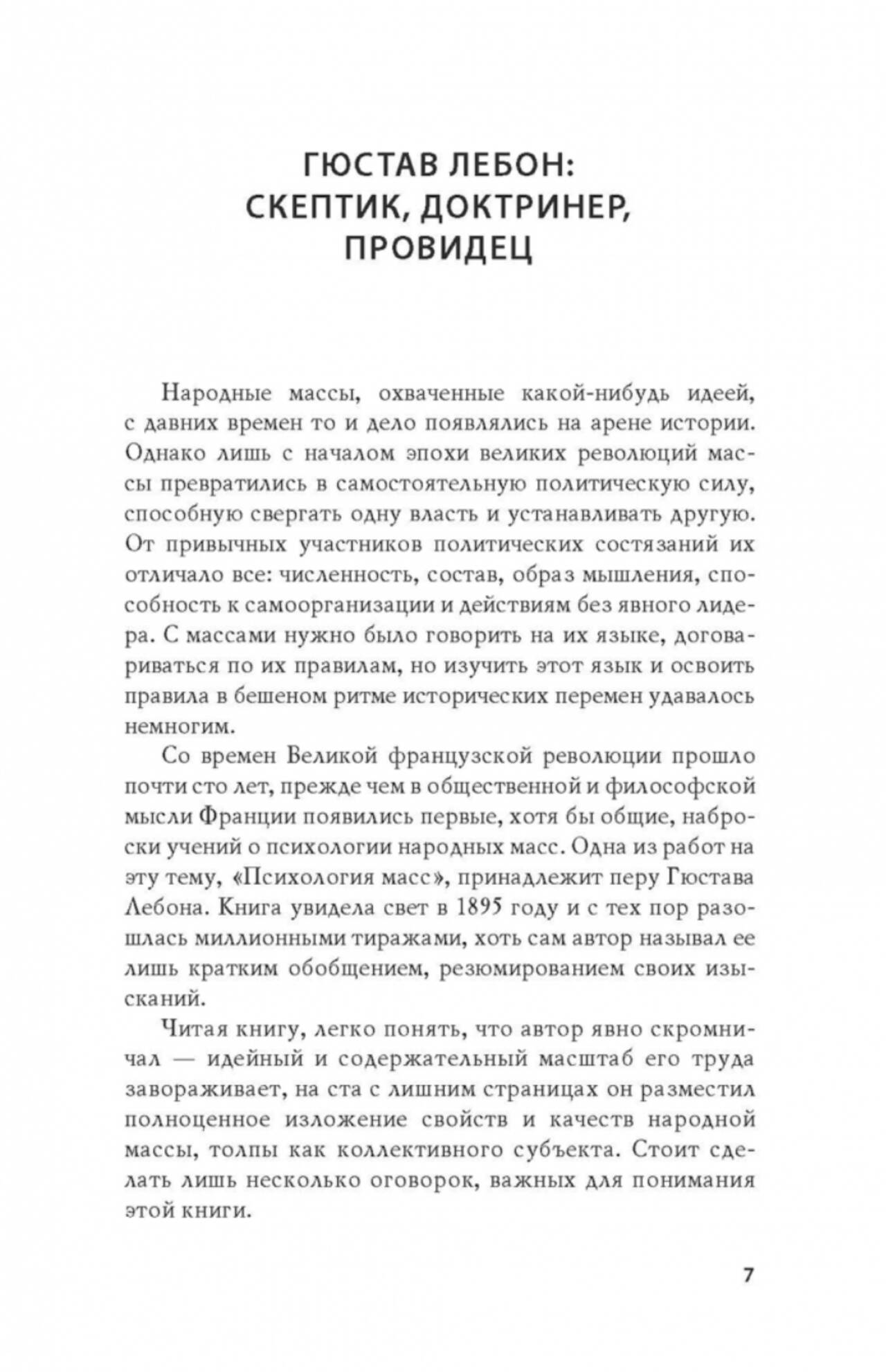
Since ancient times, popular masses, captivated by some idea, have regularly appeared on the stage of history. However, it was only with the onset of the era of great revolutions that the masses emerged as an independent political force, capable of overthrowing one government and establishing another. They were distinguished from the usual participants in political competitions in every way: their size, composition, way of thinking, and ability to self-organize and act without a clear leader. It was necessary to speak to the masses in their language, negotiate according to their rules, but few succeeded in learning this language and mastering its rules amid the frantic pace of historical change.
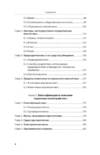
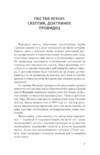
Almost a century passed after the French Revolution before the first, even general, theories on the psychology of the masses appeared in French social and philosophical thought. One of the works on this topic, "The Psychology of the Masses," was written by Gustave Le Bon. The book was published in 1895 and has since sold millions of copies, although the author himself called it merely a brief summary, a summary of his research.
Reading the book, it's easy to see that the author was clearly being modest – the conceptual and substantive scope of his work is captivating; in over a hundred pages, he has provided a comprehensive exposition of the characteristics and qualities of the masses, the crowd as a collective entity.
Almost a century passed after the French Revolution before the first, even general, theories on the psychology of the masses appeared in French social and philosophical thought. One of the works on this topic, "The Psychology of the Masses," was written by Gustave Le Bon. The book was published in 1895 and has since sold millions of copies, although the author himself called it merely a brief summary, a summary of his research.
Reading the book, it's easy to see that the author was clearly being modest – the conceptual and substantive scope of his work is captivating; in over a hundred pages, he has provided a comprehensive exposition of the characteristics and qualities of the masses, the crowd as a collective entity.
See also:
- All books by the publisher
- All books by the author