











Color in Russian culture: White light, beautiful maiden, heart of gold – Golubeva Marina – Mann, Ivanov, and Ferber – 2026 – ISBN 978-5-00281-000-0
Color in Russian culture: White light, beautiful maiden, heart of gold
14.99 €
The only thing available 2

Color in Russian culture: White light, beautiful maiden, heart of gold
14.99 €
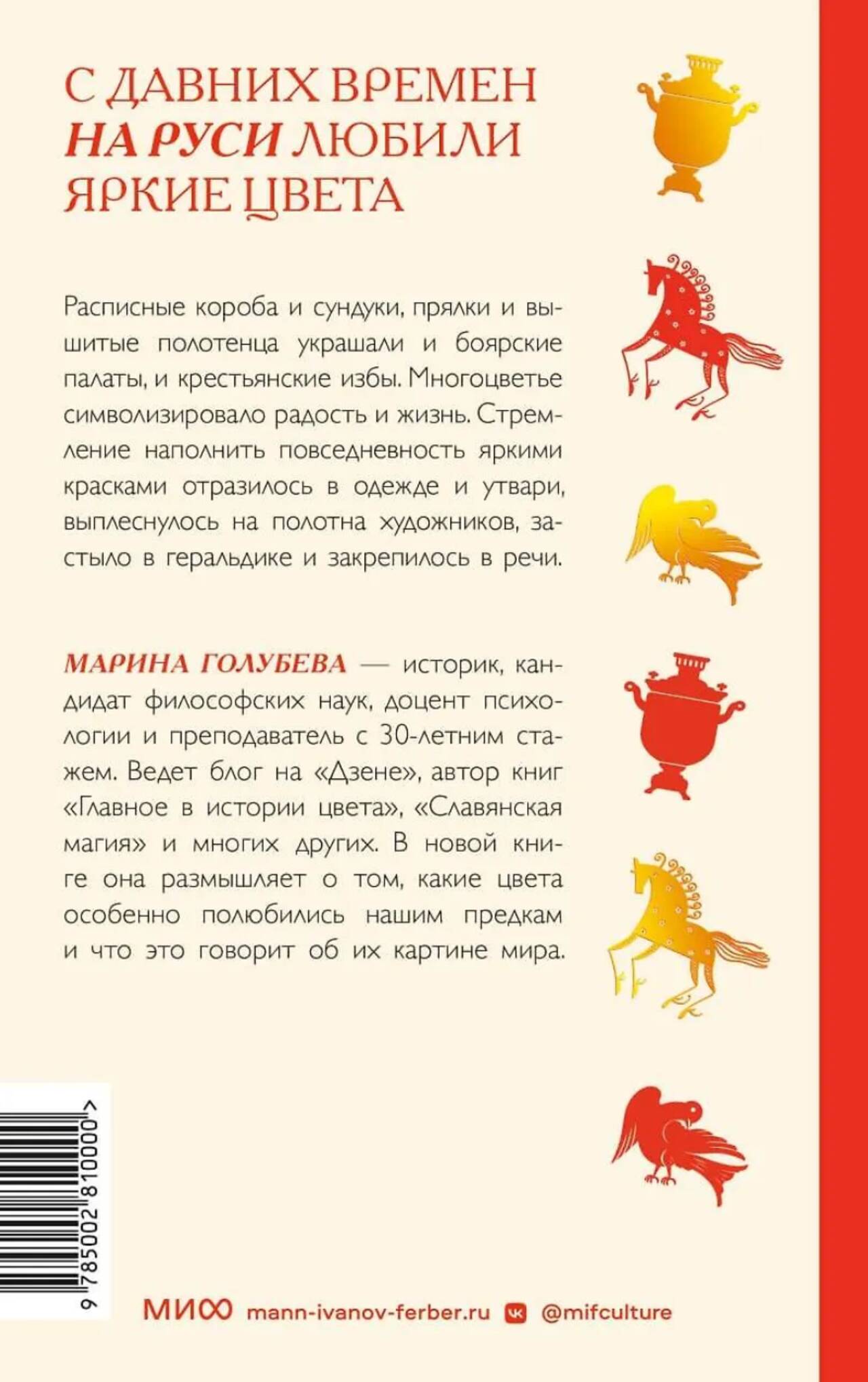
Bright colors have been a favorite in Rus' since ancient times. Painted boxes and chests, spinning wheels, and embroidered towels adorned both boyar chambers and peasant huts. Multicolor symbolized joy and life. The desire to fill everyday life with bright colors was reflected in clothing and utensils, captured in artists' canvases, and, of course, ingrained in speech.
Why are "red" and "beautiful" the same word? Where did the almost mystical awe of the color blue come from, causing Ivan the Terrible to fear people with blue eyes? And how did white—a symbol of purity and holiness—remain the color of mourning for centuries?
Marina Golubeva, a historian, PhD in philosophy, associate professor of psychology, and teacher with 30 years of experience, is the author of "The Main Thing in the History of Color," "Slavic Magic," "The History of Fortune-Telling and Predictions," and many others. She reflects on the colors our ancestors were particularly fond of and what this reveals about their worldview.
Look at Russian culture through the prism of color and see what previously eluded you: how the ancient worship of Light gave birth to the sacred triad of "white-black-red," how the palette of icon painters was born from minerals, insects, and apple juice, and how the harsh code of the Middle Ages was transformed by the 19th century thanks to shades like "fainting frog" and "flea in childbed fever."
Why are "red" and "beautiful" the same word? Where did the almost mystical awe of the color blue come from, causing Ivan the Terrible to fear people with blue eyes? And how did white—a symbol of purity and holiness—remain the color of mourning for centuries?
Marina Golubeva, a historian, PhD in philosophy, associate professor of psychology, and teacher with 30 years of experience, is the author of "The Main Thing in the History of Color," "Slavic Magic," "The History of Fortune-Telling and Predictions," and many others. She reflects on the colors our ancestors were particularly fond of and what this reveals about their worldview.
Look at Russian culture through the prism of color and see what previously eluded you: how the ancient worship of Light gave birth to the sacred triad of "white-black-red," how the palette of icon painters was born from minerals, insects, and apple juice, and how the harsh code of the Middle Ages was transformed by the 19th century thanks to shades like "fainting frog" and "flea in childbed fever."
See also:
- All books by the publisher
- All books by the author
- All books in the series Color in world culture