



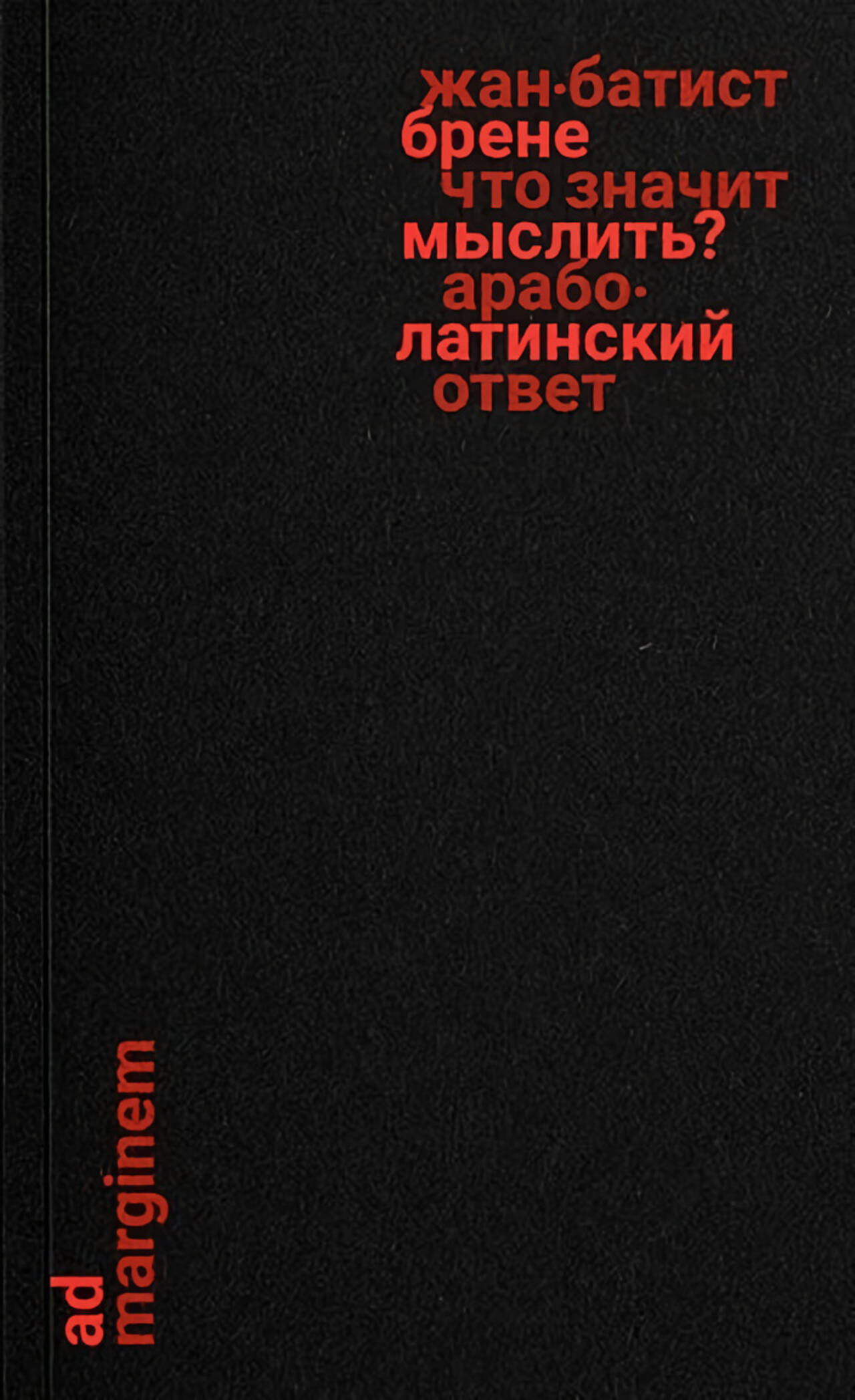
What does it mean to think? An Arabic-Latin answer – Brené Jean-Baptiste – Hell Marginem – 2024 – ISBN 978-5-91103-733-8
What does it mean to think? An Arabic-Latin answer
9.99 €
Out of stock

What does it mean to think? An Arabic-Latin answer
9.99 €
To add a product to the waitlist, please sign in:
Log in
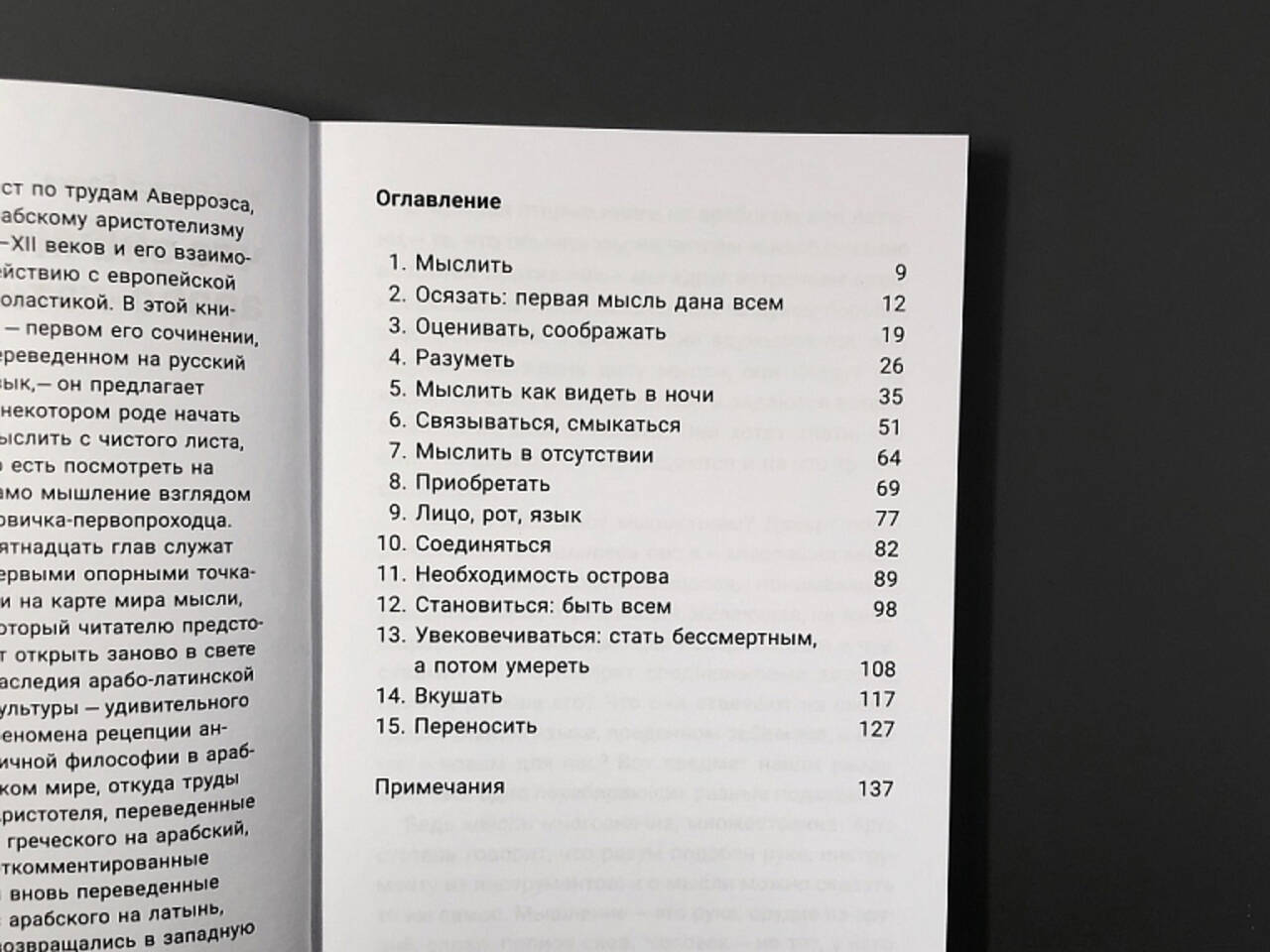
Jean-Baptiste Brenet (born 1972) is a French philosopher, professor at the Sorbonne, a specialist in the works of Averroes, Arabic Aristotelianism of the ninth and twelfth centuries, and its interaction with European scholasticism. In this book - his first work translated into Russian - he proposes, in a way, to start thinking from scratch, that is, to look at thinking itself from the perspective of a pioneering beginner. The fifteen chapters serve as the first reference points on the map of the world of thought, which the reader will have to rediscover in the light of the heritage of Arab-Latin culture - the amazing phenomenon of the reception of ancient philosophy in the Arab world, from where the works of Aristotle, translated from Greek into Arabic, commented and translated again from Arabic into Latin, returned to Western civilization.
The European Modern Age originated with Descartes and his understanding of the cogito, which seems to encompass everything. It came about, however, as a result of nothing less than the summation of what had been produced in the Arabic and Latin worlds of the preceding centuries, during which the figure of the intellectual was born. What was it that medieval authors were able to say about thought that was so striking - and yet so betrayed, and therefore new to us? That is the subject of this book, which freely traverses different approaches to thought. For thought is plural. If for Aristotle the intellect is like a hand - an instrument of instruments - then the same can be said of thought. Thought is a hand, an instrument that unites all instruments, a word full of words. A man is not one who has no business of his own; he is one whose activity has little more than one name; an animal whose activity can only be called by a multitude of names. This book is a kind of lexicon, a set of landmarks on a mental map, the links between which may perhaps delineate the meaning of what is called thinking. - Jean-Baptiste Brenet
The European Modern Age originated with Descartes and his understanding of the cogito, which seems to encompass everything. It came about, however, as a result of nothing less than the summation of what had been produced in the Arabic and Latin worlds of the preceding centuries, during which the figure of the intellectual was born. What was it that medieval authors were able to say about thought that was so striking - and yet so betrayed, and therefore new to us? That is the subject of this book, which freely traverses different approaches to thought. For thought is plural. If for Aristotle the intellect is like a hand - an instrument of instruments - then the same can be said of thought. Thought is a hand, an instrument that unites all instruments, a word full of words. A man is not one who has no business of his own; he is one whose activity has little more than one name; an animal whose activity can only be called by a multitude of names. This book is a kind of lexicon, a set of landmarks on a mental map, the links between which may perhaps delineate the meaning of what is called thinking. - Jean-Baptiste Brenet
See also:
- All books by the publisher
- All books by the author